Origins of the Stone Forest
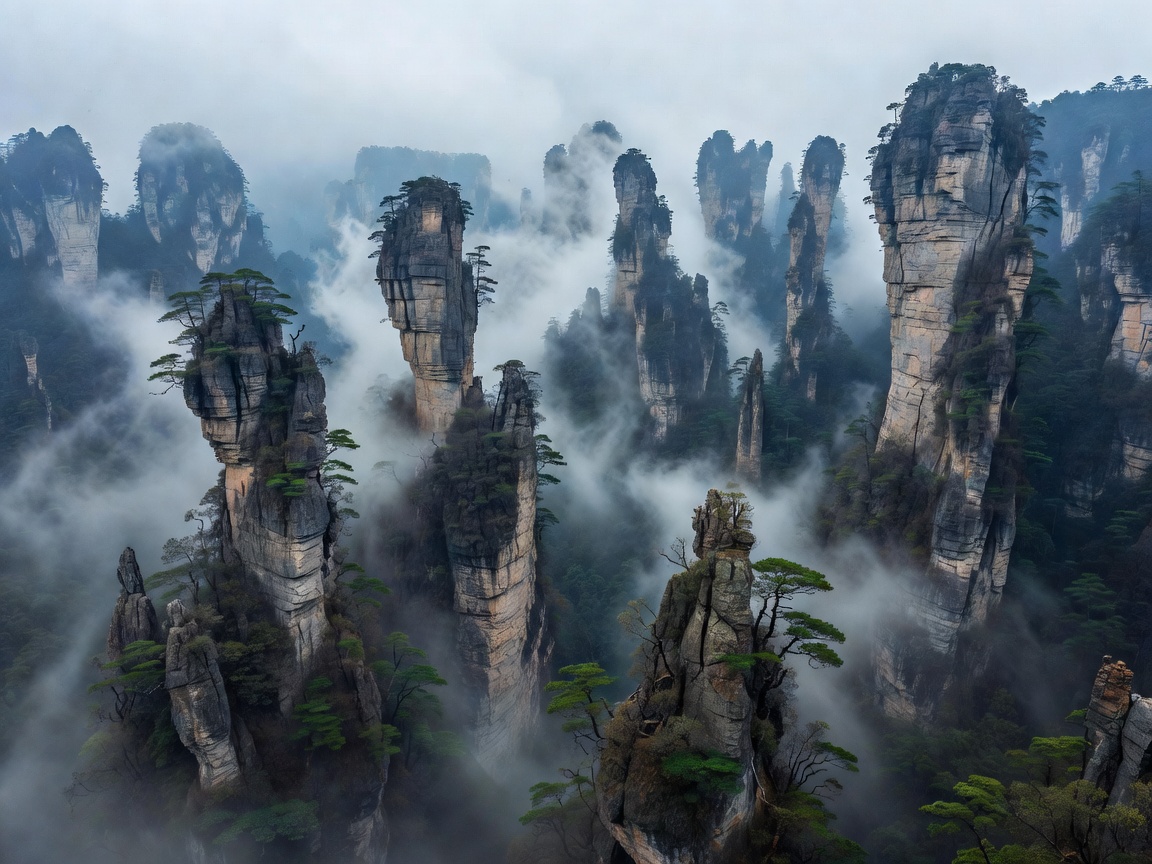
Zhangjiajie National Forest Park is part of the larger Wulingyuan Scenic Area, recognized as a UNESCO World Heritage site since 1992. The area is famous for its 3,000 individual vertical quartz sandstone pillars, many reaching heights exceeding 1,080 meters (3,500 feet).
When moist air rises from the valleys and condensates into low-lying sea fog, the bases of these thin, towering peaks become invisible. The upper summits appear to float in mid-air, creating a surreal landscape that inspired James Cameron's cinematic floating Hallelujah Mountains in *Avatar*.
Unlike karst limestone landscapes formed by chemical dissolution, Zhangjiajie’s pillars are quartz sandstone monoliths created by physical erosion. Millions of years of ice expansion during winter freezes, physical stream erosion, and root wedging by trees grew vertical fissures into massive freestanding towers.
Biodiversity and Subtropical Climate
The damp, subtropical climate fosters dense pine forests clinging directly onto the narrow crevices of the vertical rock faces. Rare wildlife, including the Chinese giant salamander, rhesus macaques, and cloud leopards, inhabit this isolated mountain labyrinth.
Visitors navigate this geography via high-tech engineering marvels, including the Bailong Elevator—a glass elevator built into the side of a cliff that lifts visitors 326 meters in under 90 seconds.