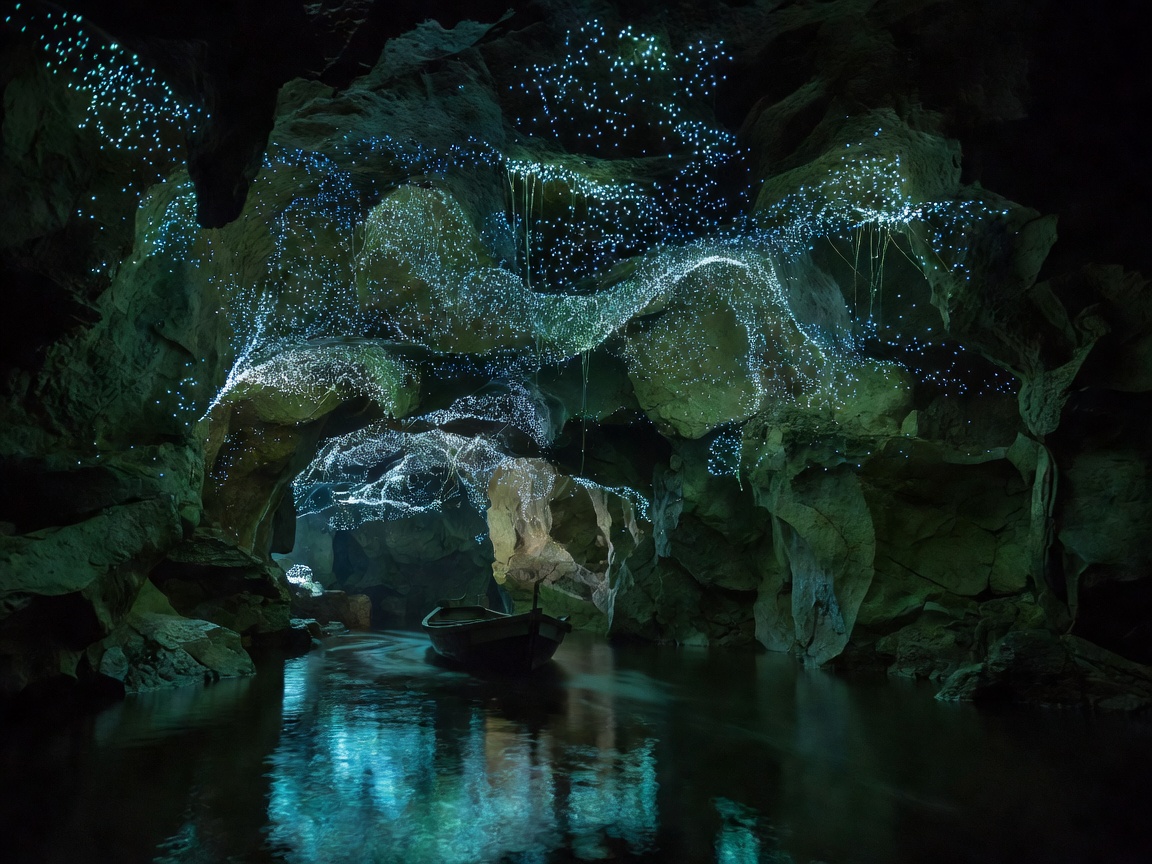
Subterranean Bioluminescence
Deep beneath the rolling green hills of New Zealand's Waikato region lies a 30-million-year-old limestone cavern system known as Waitomo. The primary attraction of this underground network is the Glowworm Grotto, where thousands of tiny, bioluminescent fungus gnat larvae (*Arachnocampa luminosa*) suspend glowing silk threads from the ceiling.
These bioluminescent silk lines function as sticky snares to catch flying insects trapped inside the pitch-black caves. To an observer floating silently along the underground Waitomo River in a wooden boat, the ceiling mimics a brilliant, starlit midnight sky deep beneath the surface of the Earth.
The light emitted by *Arachnocampa luminosa* is produced by a chemical reaction between luciferase enzymes, luciferin substrate, ATP energy molecules, and oxygen within the organism's specialized excretory organs.
Karst Limestone Geology
The caves were formed from fossilized coral, shells, and marine skeletons deposited on the ocean floor 30 million years ago. Earth's tectonic shifts pushed the rock above sea level, where rainwater slowly dissolved cracks in the limestone to forge vast underground caverns, stalactites, and stalagmites.